In this constantly changing world of medical devices, choosing the right type of catheter can really make a difference in patient care. Among the many options out there, Non-Tunneled Catheters stand out because of their unique benefits. These little gadgets are mainly meant for short-term use, so they’re perfect for emergencies or situations where quick access is needed. Healthcare professionals often find it tricky to pick the best catheter — there’s quite a bit to consider.
Brands like Medtronic and Becton Dickinson offer a variety of Non-Tunneled Catheter options designed to meet different healthcare needs. It’s pretty important to understand the differences between Tunneled and Non-Tunneled Catheters. Knowing this stuff helps deliver the best care and keeps complications at bay. Of course, there’s always room to improve product design and functionality.
Innovation is really the way forward if we want these catheters to perform even better. Getting feedback from healthcare providers can reveal valuable insights that push things in the right direction. When we look at the top options for 2026, it’s crucial to think about things like the quality of materials, how easy they are to insert, and whether they’re comfortable for the patient. In the end, making well-informed choices can lead to better healthcare solutions around the globe.

Overview of Non Tunneled Catheters and Their Uses
Non-tunneled catheters are essential in various medical settings. They provide critical access to the venous system for patients needing long-term treatments. Commonly used in emergency care, they allow for rapid drug administration. According to industry reports, the global market for non-tunneled catheters is expected to reach $1.5 billion by 2026, highlighting their importance in healthcare.
These catheters are often inserted into peripheral veins. They can be left in place for several days. Their versatility offers significant advantages in both inpatient and outpatient care. However, there are challenges associated with their use. Risk of infection is a common concern. Research indicates that while non-tunneled catheters offer immediate benefits, they require careful management to prevent complications.
In terms of application, these catheters are used for fluid administration, blood sampling, and monitoring. They cater to various patient needs, particularly in oncology and Critical Care settings. Despite their wide adoption, ongoing training for healthcare professionals is vital. Ensuring proper insertion techniques can minimize risks. The focus should always remain on patient safety and catheter longevity.
Key Features to Consider When Choosing Non Tunneled Catheters
When selecting non-tunneled catheters, various key features must be assessed to meet clinical needs. Safety is paramount. According to the Global Market Insights report, over 40% of catheter-related infections stem from improper insertion techniques and lack of adequate materials. Thus, the material of the catheter can significantly impact patient outcomes. Selecting catheters made from biocompatible materials can reduce complications.
Other essential factors include the insertion angle and length. These characteristics directly affect the catheter's functionality. Reports suggest that inappropriate lengths can lead to increased risks of thrombosis or other vascular-related issues. Insertion angle is crucial for minimizing discomfort and ensuring proper placement. Physiological compatibility should be carefully considered to avoid complications.
Tip: Always verify the compatibility of the catheter with patients’ specific medical conditions.
Patient comfort is another consideration. Non-tunneled catheters cause varying levels of discomfort during insertion. Clinicians should prioritize designs that minimize pain. Data shows that catheters with smooth surfaces and rounded tips can enhance patient comfort significantly.
Tip: Educate patients about the procedure to ease anxiety.
In conclusion, it is essential to weigh these factors before making a selection. Testing new models is crucial. Continuous assessment can identify areas for improvement and lead to better patient care.
Top Non Tunneled Catheter Brands for 2026
As healthcare technology evolves, non-tunneled catheters are essential for various medical applications. The market shows significant growth, driven by increasing patient needs. According to recent reports, the global non-tunneled catheter market is projected to exceed $3 billion by 2026. This reflects a growing demand for flexible medical solutions.
Key factors driving this growth include improved patient outcomes and reduced infection rates. New materials and designs enhance catheter longevity and comfort. Clinicians are reporting better patient feedback. It’s crucial to stay updated on the latest brands that are prioritizing innovation. However, challenges remain. Not all products meet the rigorous standards expected. Some facilities still struggle with catheter-related infections.
The right choice in non-tunneled catheters can significantly influence patient recovery. A recent study found that the infection rate of certain brands can be as high as 15%. In contrast, options with advanced antimicrobial coatings show improved performance. Selecting the best product involves understanding these variances. Moreover, ongoing training for healthcare providers is vital to utilize these devices effectively. The landscape is changing, but vigilance is necessary to ensure patient safety.
2026 Top Non Tunneled Catheter Options for Global Buyers
Comparative Analysis of Non Tunneled Catheter Options
In recent years, the demand for effective medical devices, particularly Non Tunneled Catheters, has risen significantly across healthcare sectors. According to industry reports, the global market for non tunneled catheter options is projected to grow at a compound annual growth rate (CAGR) of 7.5% from 2023 to 2026. This growth reflects an increasing need for efficient Vascular Access solutions in critical care settings.
A comparative analysis of non tunneled catheter options reveals distinct variations in design and functionality. For example, some models feature unique biocompatible materials that reduce thrombus formation, improving patient outcomes. Data from healthcare studies indicate that non tunneled catheters can provide effective access for up to 30 days, yet complications such as infection and occlusion remain prevalent. Notably, a review found a 40% rate of complications associated with prolonged use. This statistic highlights an area in need of ongoing evaluation and improvement.
Despite advancements, the selection of the appropriate non tunneled catheter often lacks a standardized approach. Factors like the patient's condition and the procedure must be thoroughly assessed. There is still much to learn about optimizing benefits while minimizing risks. The variation in clinician experience also plays a critical role in outcomes. Consequently, while the future of non tunneled catheters appears promising, more refined strategies are essential to address existing challenges in practice.
Emerging Technologies in Non Tunneled Catheter Design
Emerging technologies in non-tunneled catheter design are transforming patient care. The demand is growing as more healthcare providers recognize their key role in acute care settings. Non-tunneling catheters offer immediate access, which is critical for fluid administration. According to a recent report by the Global Catheter Market Analysis, the segment for non-tunneled devices is expected to grow by over 8% annually through 2026.
Innovations are centered around biocompatible materials, which reduce complications. Recent studies highlight that advanced coatings can minimize infection rates associated with non-tunneled catheters. For instance, a new polymer coating developed in labs shows a 30% reduction in bacterial adherence. Yet, challenges remain. Not all materials offer the same durability, leading to concerns about the longevity of Non Tunneled Pd Catheter systems in high-stress environments.
Another exciting area is the integration of smart technology. Some designs feature sensors that monitor placement and flow rates. This technology provides real-time data to clinicians, ensuring better patient outcomes. However, there is still skepticism about incorporating these technologies due to costs. Healthcare facilities must weigh the benefits against budget limitations, even as many studies advocate for their potential to enhance safety and efficiency.
Global Market Trends Affecting Non Tunneled Catheter Purchases
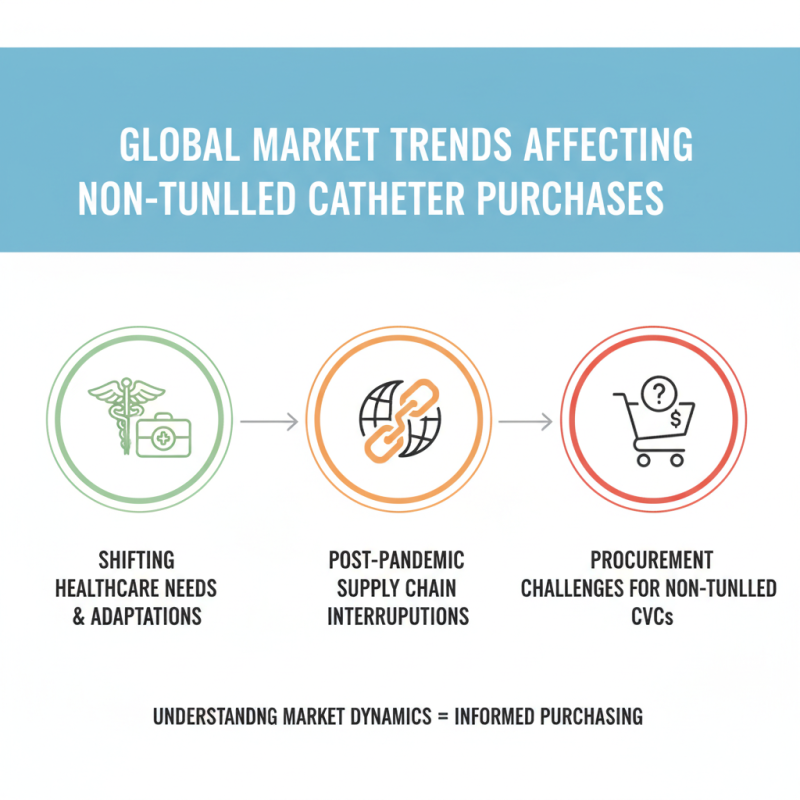
The global market for non-tunneled catheters reflects shifting healthcare needs. Healthcare providers must adapt to evolving trends. Supply chain interruptions, particularly post-pandemic, influence availability. Buyers face challenges in procuring non-tunneled CVC catheters. Understanding these market dynamics is crucial for effective purchasing decisions.
Tips for buyers: Stay informed about regional regulations. Each market has unique compliance requirements. This knowledge can prevent procurement delays. Consider engaging with local suppliers to improve responsiveness. Building relationships within local networks enhances reliability. Some buyers might overlook this step.
Cost-effectiveness remains at the forefront. Prices fluctuate due to varying production costs. Be wary of steep discounts; they may signal inferior quality. Evaluate products based on performance data. The best choices align with both budget constraints and patient care standards. Reflecting on previous purchases can highlight areas for improvement. Buyers should ask themselves if they prioritize quality over cost or vice versa. Balancing these factors is essential in today's healthcare landscape.
Regulatory Considerations for Non Tunneled Catheters Worldwide
When exploring non tunneled catheters, regulatory considerations play a crucial role. Countries have diverse regulations regarding medical devices. Understanding these requirements can be daunting. Each region may have specific standards for quality and safety. Compliance is essential for any manufacturer aiming to enter the global market.
Non Tunneled Central Catheters offer various advantages, but they also come with challenges. Manufacturers must ensure rigorous testing procedures are followed. This is crucial to meet safety standards. Inadequate compliance can lead to significant setbacks, including product recalls. Such situations can damage both reputation and financial stability.
Additionally, clinicians need to stay informed about best practices. Training personnel on proper usage is crucial for patient safety. Documentation and reporting of outcomes can help refine practices. The landscape of non tunneled catheters is evolving, and ongoing education is vital for all stakeholders involved.
2026 Top Non Tunneled Catheter Options for Global Buyers - Regulatory Considerations for Non Tunneled Catheters Worldwide
| Catheter Type | Indications | Material | Length (cm) | Regulatory Status | Key Features |
| Peripheral Inserted Central Catheter | Long-term medication administration | Silicone | 20 | FDA Approved | Anti-thrombotic coating |
| Tunneled Dialysis Catheter | Dialysis treatment | Polyurethane | 30 | CE Marked | Biocompatible design |
| Midline Catheter | Short to mid-term medication | Polyvinyl Chloride | 15 | ISO Certified | Radiopaque for visibility |
| Central Venous Catheter | Fluid administration and blood sampling | Silicone | 25 | FDA Approved | Multi-lumen for simultaneous use |
| Shockwave Catheter | Cardiac procedures | Composite materials | 20 | CE Marked | Advanced energy delivery |
Essential Insights on Central Venous Catheters: Types, Indications, and Best Practices for Optimal Patient Care
Central Venous Catheters (CVCs) play a vital role in modern medical practice, especially in critical care, surgery, and long-term treatment settings. A CVC is inserted into a large central vein, such as the jugular, subclavian, or femoral vein, allowing direct access to the bloodstream. This access is essential for various medical purposes, including the administration of medications, fluids, and blood products, as well as parenteral nutrition. Furthermore, CVCs enable healthcare professionals to monitor central venous pressure (CVP), an important indicator of a patient’s hemodynamic status.
According to a report by the Centers for Disease Control and Prevention (CDC), both the proper placement and maintenance of CVCs are crucial in preventing complications such as infections, thrombosis, and catheter-related complications. Research indicates that approximately 15-25% of patients with CVCs may experience infections, highlighting the necessity for adherence to sterile techniques and best practices. Recommendations include using ultrasound guidance for insertion, implementing bundle care to reduce infection rates, and ensuring regular assessment and maintenance of the catheter site.
In addition, recent studies suggest that the choice of catheter type—whether tunable, non-tunable, or multilumen—should be based on individual patient needs and clinical indications. This personalized approach enhances patient outcomes and minimizes the risk of complications. By focusing on evidence-based practices, healthcare providers can optimize the use of CVCs, ensuring safe and effective patient care in various medical settings.
FAQS
: Non tunneled catheters provide immediate vascular access, essential for fluid administration in acute care settings.
They can remain effective for up to 30 days, but complications may occur during this period.
Common issues include infection and occlusion, with a notable 40% complication rate for prolonged use.
Biocompatible materials help reduce thrombus formation and can lower infection rates, improving patient outcomes.
No standardized approach exists; clinician experience and patient condition significantly influence selection.
Emerging technologies, like smart sensors, provide real-time data, enhancing placement accuracy and patient safety.
The costs of new technologies can be high, leading some healthcare facilities to hesitate despite potential benefits.
Advanced coatings can cut down bacterial adherence by 30%, lowering infection risks during use.
Not all biocompatible materials have the same durability, posing concerns in high-stress environments.
Yes, ongoing evaluation is crucial to enhance safety and efficiency while addressing existing complications.
Conclusion
The article "2026 Top Non Tunneled Catheter Options for Global Buyers" provides a comprehensive guide on the essential aspects of non tunneled catheters. It begins with an overview of their uses in medical settings, emphasizing their role in providing immediate access to the vascular system. Key features to consider when selecting a non tunneled catheter, such as material, size, and insertion methods, are discussed to aid healthcare professionals in making informed choices.
Additionally, the article presents a comparative analysis of various non tunneled catheter options available in 2026, highlighting emerging technologies that enhance their design and functionality. It also examines global market trends that influence purchasing decisions and outlines important regulatory considerations that need to be taken into account globally. This synthesis of information aims to equip buyers with the necessary insights for navigating the evolving landscape of non tunneled catheters.